

The study of gemology requires people to examine gemstone beauty while they assess gemstone material characteristics and prove gemstone authenticity. Gemologists use luminescence as their most interesting tool because this phenomenon enables gemstones to show visible light when they receive ultraviolet (UV) radiation exposure.
Gemologists study UV light gemstone behavior to identify gemstone treatments and synthetic stones while they track the geographic origin of some gemstones. Modern gemstone testing and identification work depend on luminescence as a crucial element.
Luminescence describes light emission from materials that have absorbed energy through external sources, which typically include ultraviolet (UV) light. The gemstone absorbs UV light, which causes specific elements and structural defects within the crystal to absorb energy and emit it back as visible light. The gemstone exhibits a particular color glow that results from its chemical makeup and the presence of impurities.
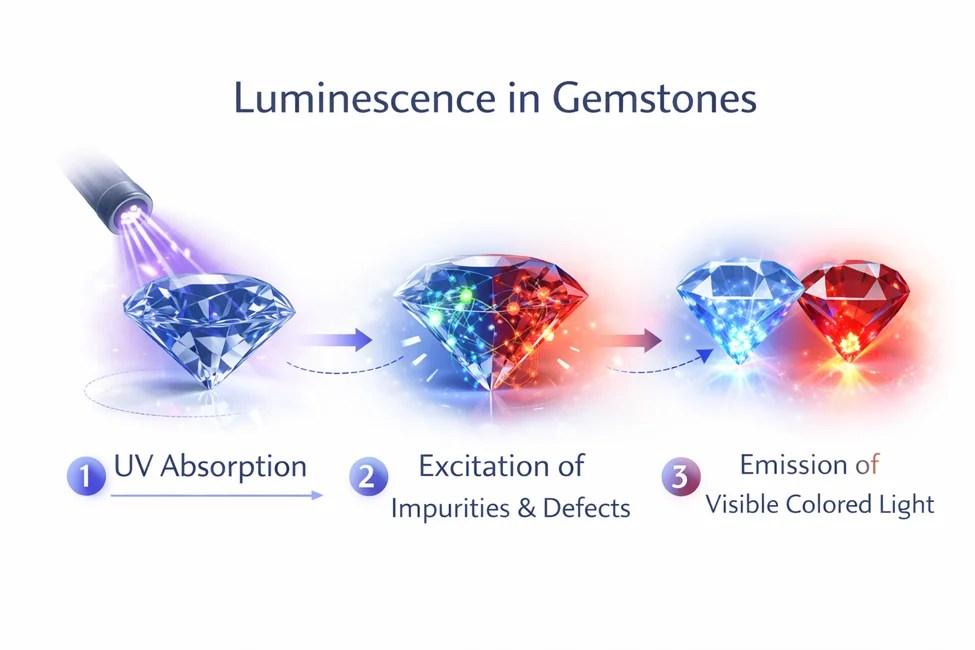
In gemology luminescence exists as two primary forms of appearance.
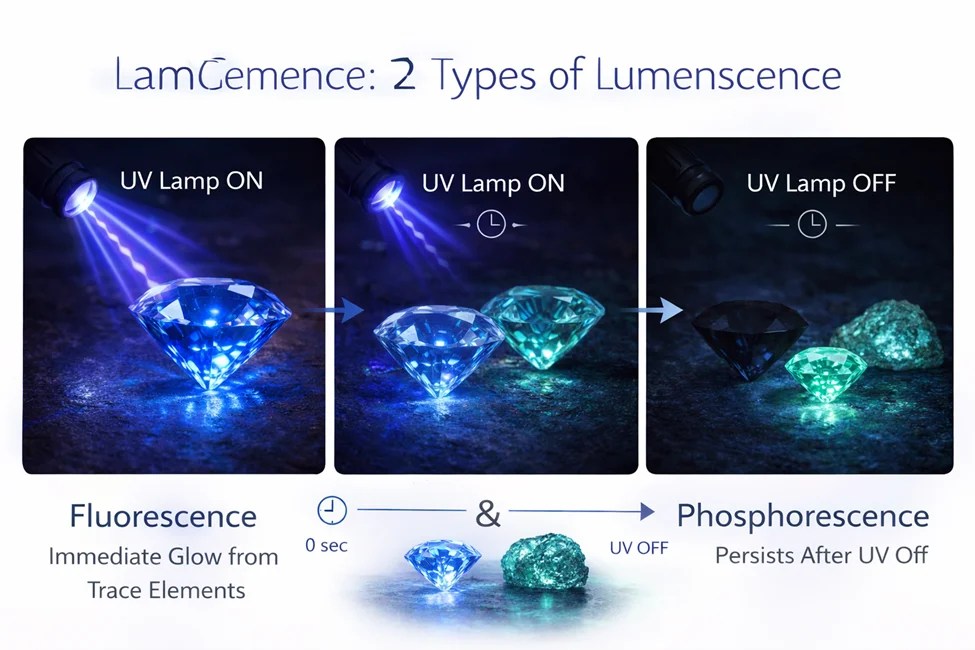
Fluorescence enables gemstones to emit an immediate glow through UV light which stops when the UV radiation source disappears. The most widely used luminescence method in gemstone analysis works with this testing method.
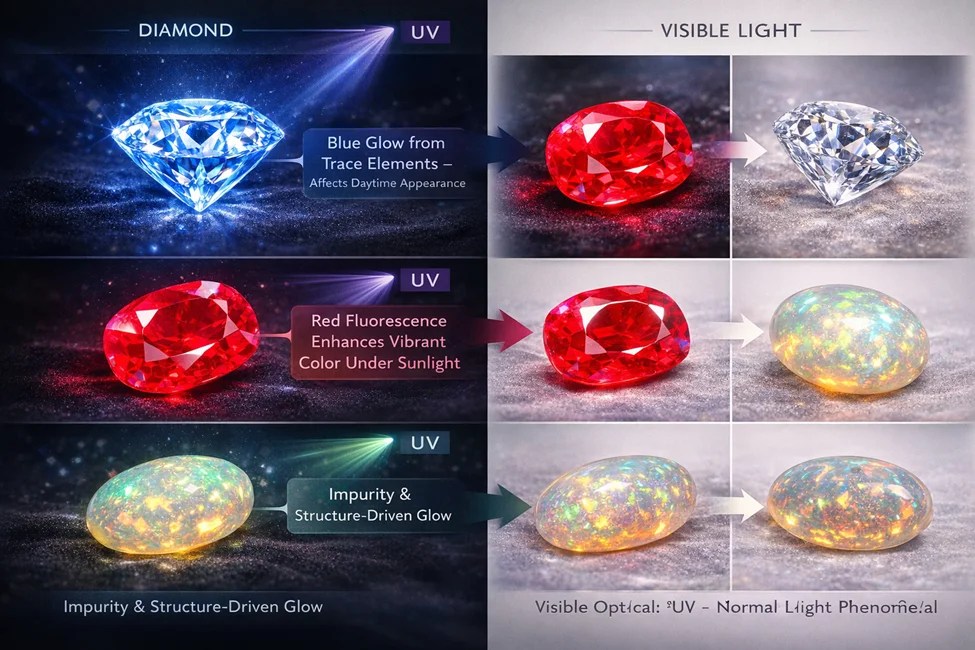
Diamonds frequently exhibit blue fluorescence when exposed to ultraviolet light because of very small trace elements that exist in their crystal structure.
Phosphorescence enables a gemstone to maintain its glow after the UV light source has been turned off. The glow may last for a few seconds or even minutes.
This phenomenon occurs less frequently but certain diamonds and minerals display it.
Gemologists rely on luminescence as their primary tool for gemological analysis because it enables them to detect hidden characteristics which standard light sources cannot reveal. The process involves finding out which gemstone treatments have been applied.
Gemstones undergo various treatments because these processes improve their color and purity and make them more resilient to damage. The gemstone will display different reactions to ultraviolet light because of these treatment modifications.
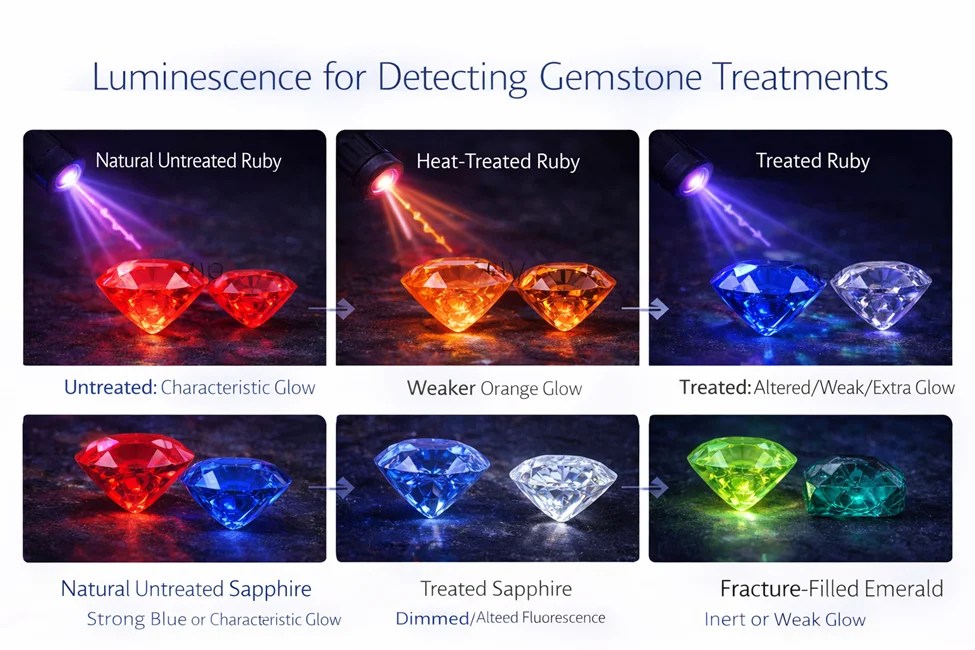
For instance:
Gemologists use these reactions to determine whether gemstones have received any treatment or undergone changes.
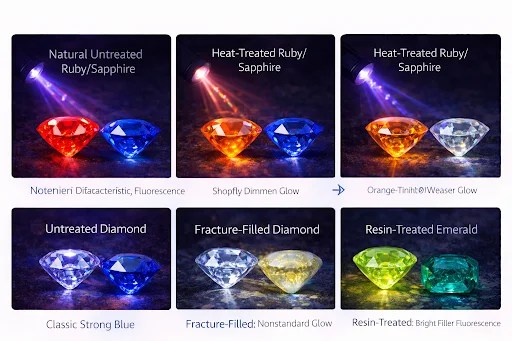
The main application of luminescence involves connecting natural gemstones with their synthetic counterparts which are produced in laboratories. Synthetic gemstones are created under controlled conditions which lead to them developing distinct trace elemental and structural characteristics that differ from natural gemstones.
For example:
Gemologists use these clues to determine whether a gemstone is a natural product or an artificial creation.
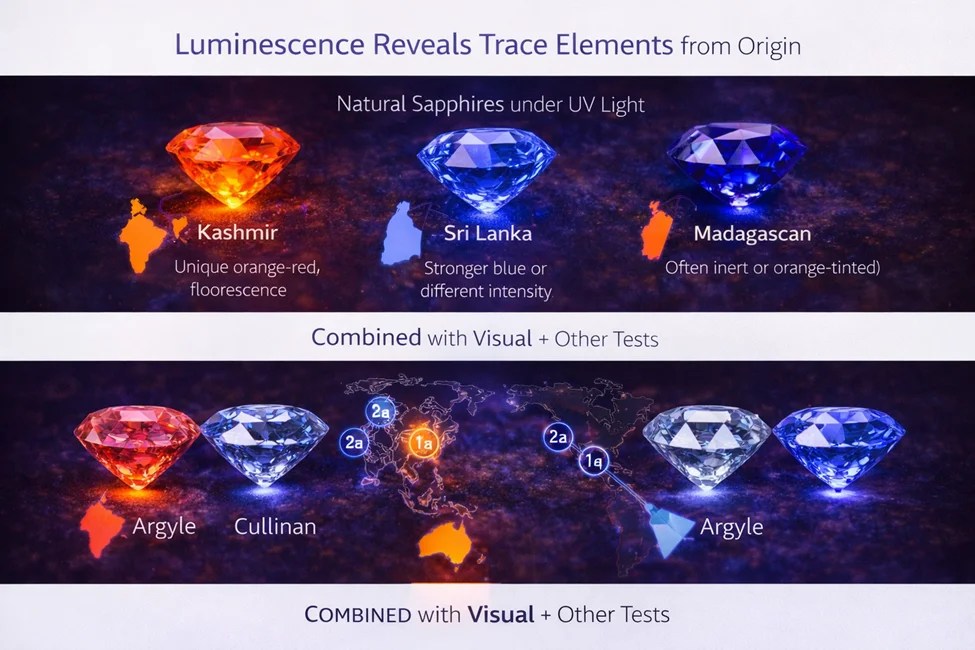
The process of luminescence analysis helps scientists identify where gemstones originate from when determining their geographic origins. The specific mining area where gemstones are extracted determines which trace elements will appear in the gemstones, which then affects their response to UV radiation testing.
For example:
The combination of luminescence testing findings together with diamond tests results, and visible observations, creates a base for various gemological identification methods.
Gemologists use specialized instruments to study luminescence in gemstones.
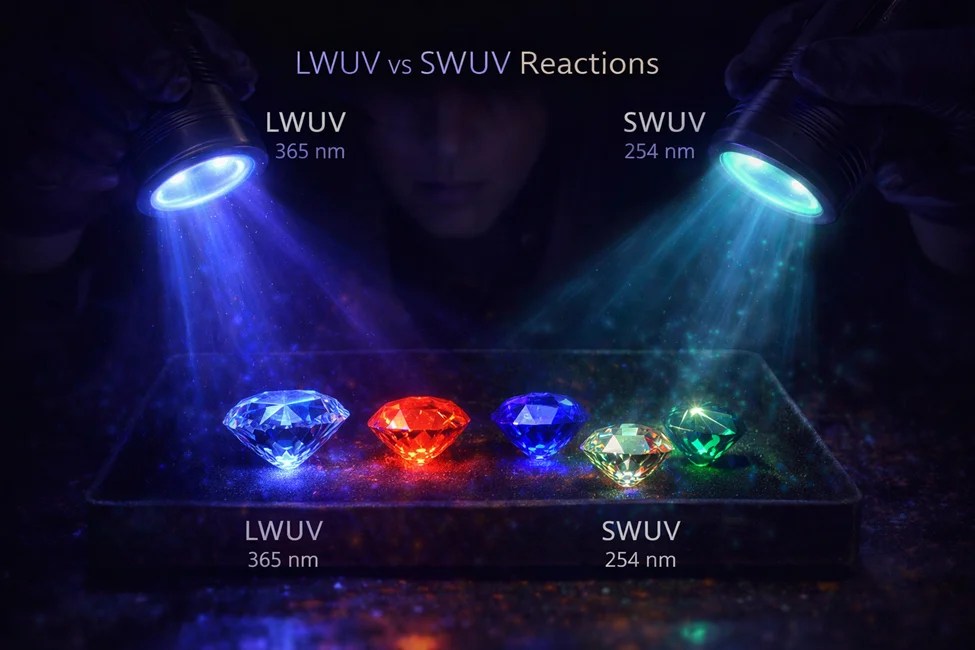
Ultraviolet Lamps UV lamps are the most common tools used to observe gemstone fluorescence. These lamps emit two types of ultraviolet radiation:
Different gemstones react differently under each type of UV light, which provides additional diagnostic information.
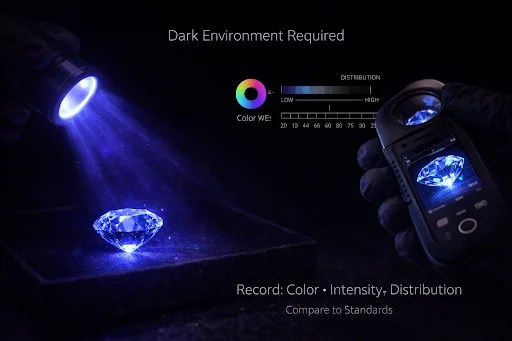
Dark Observation Environment Luminescence testing requires a completely dark space to obtain optimal results because darkness helps to see the gemstone’s luminescence. Gemologists study the emitted light by analyzing its color, intensity, and distribution pattern.
The scientists record these measurements to compare them against established gemstone behavior standards.
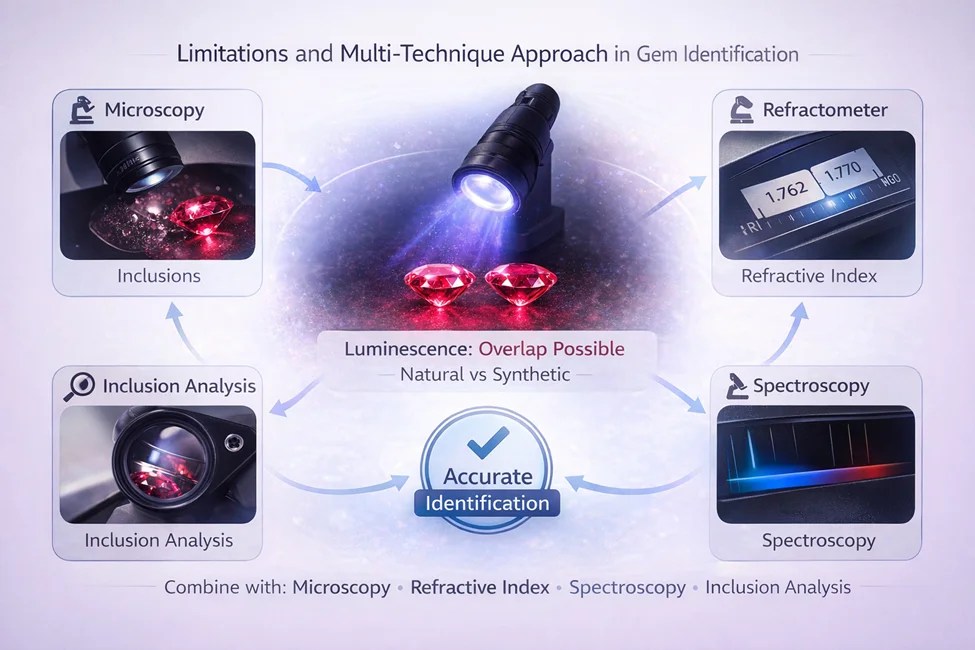
Although luminescence is a valuable tool, it is not a standalone method for gemstone identification. Many gemstones may show weak or no fluorescence, and some natural and synthetic stones may display similar reactions.
Therefore, gemologists usually combine luminescence testing with other methods such as:
Using multiple techniques ensures more accurate gemstone identification.
The fluorescent abilities of various gemstones are widely recognized by people.
Natural diamonds show blue fluorescence when exposed to ultraviolet light according to several instances. The diamond appearance changes because of strong fluorescence during daylight hours the way people perceive it.
Rubies demonstrate bright red fluorescence which makes their vibrant color even more intense when people see them under sunlight.
The structural characteristics and impurity content of certain opals determine their ability to exhibit luminescence.
The scientific research and visual appeal of gemstones both rely on luminescence as shown by these particular cases.
Luminescence serves as a potent and intriguing instrument for gemology which enables researchers to unveil concealed gemstone facts. Gemologists use ultraviolet light to observe gemstone reactions because this method enables them to identify treatments, differentiate between natural and synthetic stones, and sometimes determine the originating geographic location of the gems.
The identification process for gemstones relies on multiple methods but luminescence remains essential for contemporary gem testing. Professional education in gemology provides an ideal pathway for those who wish to acquire advanced gemstone analysis skills.
Explore the world of gemstones with IIG – International Institute of Gemology, India, and develop the expertise needed to understand and evaluate precious gems.
 13
Oct
 13
Oct
 02
Oct
 23
Sep





Not a member yet? Register now
Are you a member? Login now