The India – EU Free Trade Agreement is being rightly celebrated as a landmark moment for our gems and jewellery industry.
In simple terms, the EU will eliminate import duties (2.5- 4%) on Indian gems and jewellery, giving Indian manufacturers access to one of the world’s largest and most discerning consumer markets on far more competitive terms.
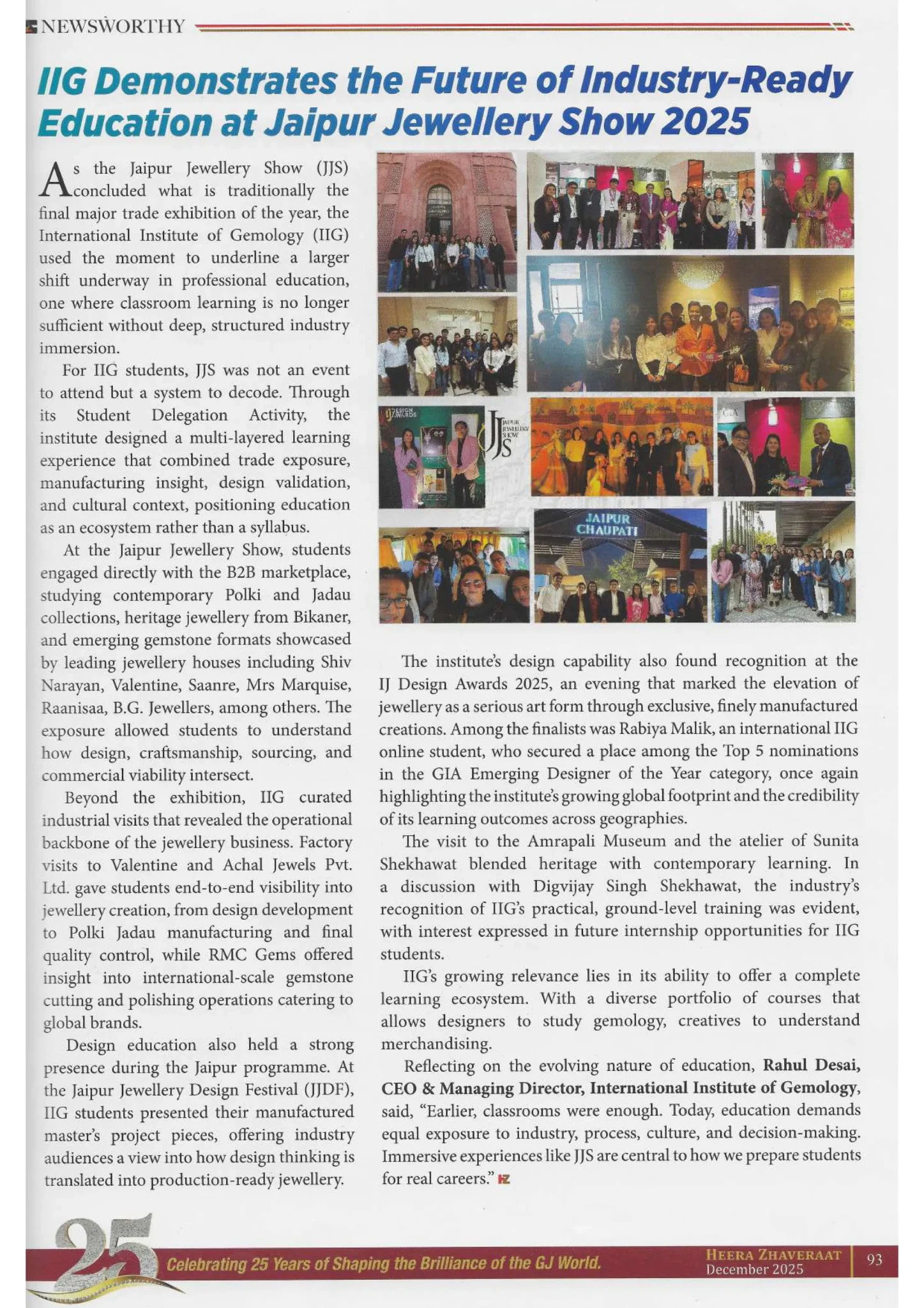
At a time when US tariffs have disrupted exports and forced the industry to re-evaluate its dependence on a single geography, this agreement arrives as a strategic counterbalance (and not a replacement as many would think)
It opens an additional growth engine, one that rewards quality, design, and credibility.
From a business lens, the upside is clear:
- Better price competitiveness
- Improved margins
- Stronger footing against global competitors
Manufacturing hubs across Gujarat, Maharashtra, Rajasthan, and West Bengal stand to benefit, alongside MSME-led units that form the backbone of India’s jewellery ecosystem. Higher exports of cut and polished diamonds, fine jewellery, and value-added creations will further reinforce India’s position as a global sourcing hub.
But here’s the contrarian truth we must acknowledge: Duty-free access alone will not win Europe.
The EU is not a volume-driven market, it is a trust-driven market. European buyers will not choose India simply because jewellery is more competitively priced. They will choose India if we consistently deliver on:
- Design relevance
- Finishing excellence
- Certification credibility
- ESG and compliance readiness
And this is where an often-underestimated factor becomes critical: education and skill development.
Competing in Europe demands teams that understand not just manufacturing, but global consumer behaviour, technical standards, compliance frameworks, and design sensibilities. It requires trained designers, merchandisers, quality controllers, and retail-ready thinkers, and of course skilled artisans.
In many ways, the FTA is not merely a trade opportunity; it is a capability test. Those who treat Europe like another export destination may struggle. Those who invest in knowledge, training, and systems will build sustainable advantage.
The real winners of the India- EU FTA will be companies that use this moment to:
- Upgrade skills alongside capacity
- Invest in design education and finishing excellence
- Build trust through transparency, certification, and global best practices
Higher exports will mean increased production, more skilled jobs, and a sharper focus on value creation, aligning perfectly with India’s long-term vision of being a global value-added jewellery hub, not just a volume supplier.
As an Edupreneur, I would say: The FTA opens the door. Education determines how confidently we walk through it.

 28
Jan
28
Jan