No products in the cart.
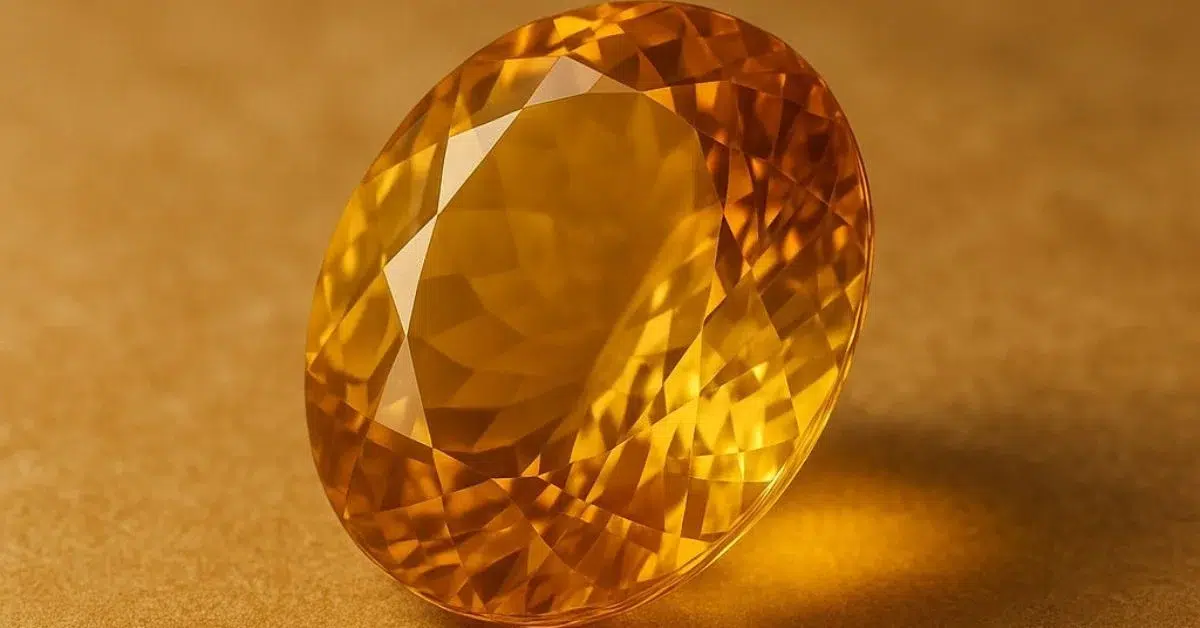
 November-born individuals are lucky to have two radiant birthstones to celebrate their month: Topaz and Citrine. Topaz dazzles with a spectrum of colors, while citrine glows with sunny shades of yellow and orange. Both gems are cherished for their soothing energies, said to invite abundance, warmth, and positivity into the wearer’s life. With their beauty and accessibility, topaz and citrine offer an array of sparkling choices. The only challenge for November birthdays is deciding which stone to treasure more.
November is a month where warmth lingers even as winter quietly draws near. The days grow shorter, yet sunlight seems to deepen, spilling over the world in tones of honey and amber. Among the gemstones that mark this season, Topaz stands out like a spark of sunlight that refuses to fade. It is the gemstone of radiance, strength, and generosity—a perfect reflection of November’s gentle glow.
Topaz, in its most classic form, carries the color of late autumn light, a deep golden hue that seems to hold a memory of summer. There’s a comforting richness in it, like the way sunlight filters through dry leaves or rests on the surface of still water. It feels alive, warm, and grounding all at once.
 What makes Topaz so special as a birthstone for November is its energy—calm yet powerful. While many gemstones are prized for their brilliance, Topaz is known for its clarity and depth. It doesn’t shout; it glows. It reflects the quiet confidence of people born in this month—steady, warm-hearted, and deeply loyal.
Symbolically, Topaz is often connected to abundance, creativity, and balance. Ancient cultures believed it held the power to calm tempers and restore harmony, like a golden thread weaving peace through life’s tangled moments. For November-born souls, this stone is a companion that encourages generosity of spirit and emotional clarity.
The name “topaz” may come from the Sanskrit word tapas, meaning “fire,” or from the Greek topazos. Historically, topaz was believed to possess many powers: the ancient Greeks saw it as a source of strength, while Europeans from the 1300s to 1600s used it to ward off magic and anger. In India, it has long been thought to promote long life, beauty, and intelligence when worn near the heart.
Imperial topaz, known for its elegant pinkish-orange color, earned its royal reputation either from the Russian Tsars, who reserved the finest stones mined in the Ural Mountains for themselves, or from a legendary 1881 gift to Brazilian Emperor Pedro II near Brazil’s topaz-rich Ouro Preto region.
The golden tones of Topaz also capture November’s essence perfectly. As the world cools, this gemstone brings light back to the heart. It is like a fire in the hearth, gentle yet radiant, reminding us that even in times of stillness, there is strength and beauty in warmth.
Topaz comes in a wide range of colors, including colorless, light blue, yellow, orange, pink, violet, brown, and, very rarely, red. Most blue topaz available today is produced by permanently treating colorless topaz with irradiation and heat. The colorful rainbow effect seen in “Mystic Topaz” is achieved by applying a thin, artificial coating to colorless topaz.
Topaz is found in many parts of the world, with notable deposits in Brazil, Sri Lanka, Russia, Pakistan, Nigeria, and the United States. Some of the most prized varieties come from Minas Gerais in Brazil, where golden and imperial hues shimmer with unmatched brilliance. This gemstone forms within granite rocks and volcanic cavities, shaped by nature over millions of years. Its range of colors—from clear and sky blue to pink, peach, and deep orange—reflects the varied landscapes that cradle it.
Topaz ranks 8 on the Mohs hardness scale, making it durable, but it requires gentle care to preserve its beauty. Clean Topaz with warm soapy water and a soft cloth, avoiding abrasive surfaces or ultrasonic cleaners that may damage the stone. Because Topaz can be sensitive to sudden temperature changes and prolonged sunlight, store it carefully, away from heat and harder gems.
Whether worn as a pendant close to the heart or as a subtle glimmer on the hand, Topaz feels like a piece of captured sunlight, a promise that brightness can exist even in the quietest moments of the year.
Topaz is not merely a gemstone. It is November’s flame—steady, generous, and full of grace.
Blue topaz is the traditional gemstone for the 4th wedding anniversary, while imperial topaz represents the 23rd wedding anniversary.
 If Topaz is November’s flame, Citrine is its sunlight. Where Topaz carries a golden depth, Citrine brings brightness and energy, the feeling of morning light streaming through the window on a crisp autumn day.
Citrine has always been known as a stone of joy. Its name is derived from “citron,” meaning lemon, and its hues range from soft yellow to honey amber. Just looking at it feels uplifting, as though it radiates optimism. It’s the gemstone that smiles back at you, and that is why it belongs to November, a month that asks for warmth and light as the world turns colder.
Unlike the intense shimmer of many gemstones, Citrine has a gentler glow, a kind of inner light that feels natural and pure. It carries the brightness of the sun without the burn. For centuries, it has been called the “Merchant’s Stone” or the “Stone of Success,” believed to attract prosperity and good fortune. But beyond luck and wealth, Citrine represents positivity and emotional renewal.
Ancient Greeks carved rock crystal ornaments that shimmered like ice, while Roman leaders favored rings set with large purple amethysts, and citrine also appeared in Roman jewelry. Citrine gained particular popularity during the Victorian era in colorful Scottish pieces. Its name likely comes from the French word for “lemon,” citron.
In a season that marks the closing of the year, Citrine reminds us to hold on to hope, to find joy in small things, and to see the light even when days grow shorter. It is a gemstone that whispers optimism, encouraging its wearer to look forward rather than backward.
For those born in November, Citrine mirrors their personality beautifully: warm, kind, expressive, and resilient. These are people who bring light to others even in the darkest of times, much like the gemstone that symbolizes their birth.
Citrine also connects deeply with the energy of gratitude—the very emotion that defines November. As many cultures gather to celebrate the season of thankfulness, Citrine becomes a symbol of that inner harvest: contentment, peace, and appreciation for life’s golden moments.
This Citrine birthstone is the transparent yellow to brownish orange variety of quartz, which has been used in jewelry for thousands of years.
Where Is Citrine Found / Origin
Citrine is primarily found in Brazil, which produces some of the world’s most radiant golden hues, especially from the Rio Grande do Sul region. Other notable sources include Madagascar, Russia, Spain, Zambia, and the United States. In nature, true Citrine is relatively rare; many of the vibrant stones in modern jewelry originate from heat-treated amethyst or smoky quartz. Regardless of origin, each piece captures the same warmth and vitality that define this luminous gemstone.
Citrine Birthstone Care & Cleaning
Citrine is a durable gemstone, ranking 7 on the Mohs scale, making it suitable for everyday wear. To preserve its sunny brilliance, clean Citrine using warm soapy water and a soft brush. Avoid harsh chemicals or ultrasonic cleaners, as extreme heat or pressure can alter its color. Store it away from harder stones like diamonds or sapphires to prevent scratches.
Wearing Citrine feels like carrying a little piece of sunshine. It brightens not only your look but your mood, too. It encourages you to open your heart, to stay generous, and to let your spirit glow.
Citrine doesn’t just belong to November. It belongs to every soul who believes in joy.
Today, most citrine is created by heat-treating amethyst, making it widely available in various sizes and one of the most affordable and sought-after yellow gemstones. Citrine is also the traditional gift for the 13th wedding anniversary.
 04
Mar
04
Mar
 25
Feb
25
Feb
 19
Feb
19
Feb
 07
Feb
07
Feb






Not a member yet? Register now
Are you a member? Login now