No products in the cart.
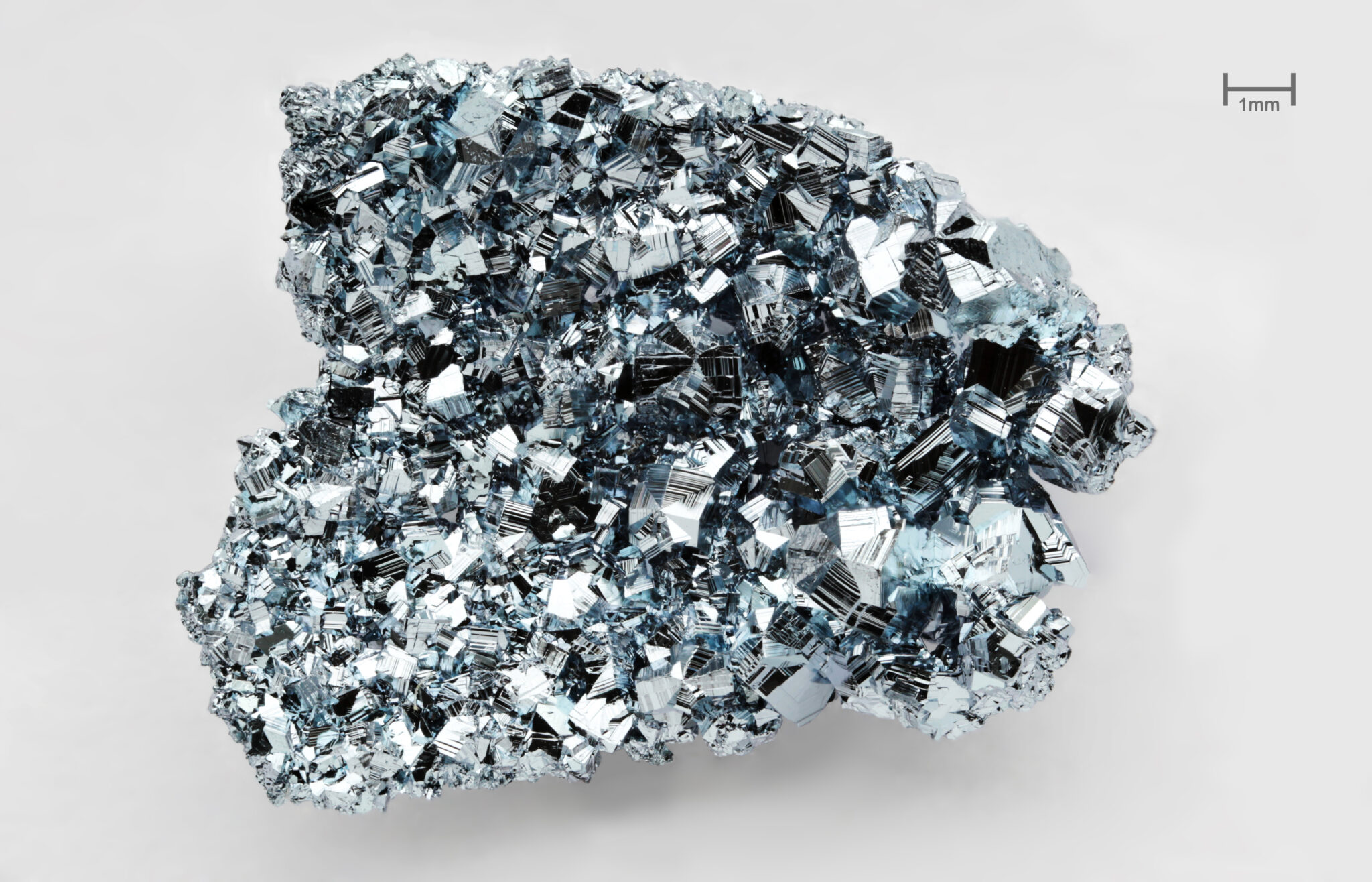
Once a name known primarily to scientists, osmium is now entering serious conversations within the global luxury and jewellery ecosystem. Rare to the point of near-myth, visually striking, and grounded in rigorous science, osmium is increasingly being recognised as the last precious metal to find its place in fine jewellery. While awareness within the jewellery trade is still evolving, collectors, watchmakers, and material innovators worldwide have already begun to position osmium as a material of enduring significance.
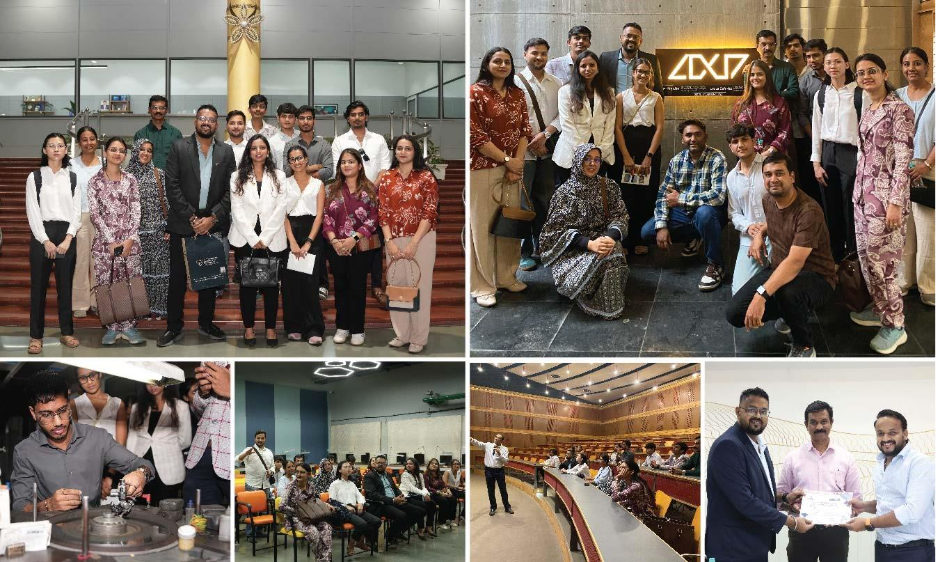
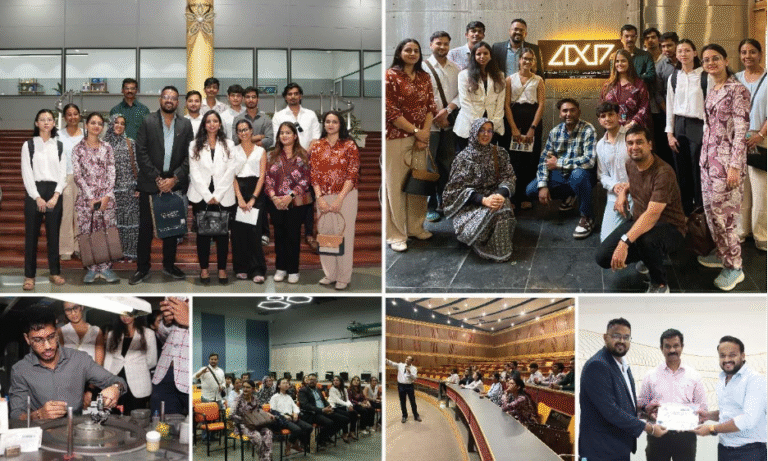
This exceptional osmium precious metal took centre stage at IIG Mumbai, where Scarlett Clauss, Vice Director, Osmium Institute, Germany, delivered a comprehensive presentation followed by an in-depth interaction with Rahul Desai, CEO & MD, International Institute of Gemology (IIG). The session examined osmium’s extreme rarity, its emergence as a luxury and investment material, and its growing relevance for the Indian jewellery landscape.
During her visit, Scarlett Clauss also engaged deeply with IIG’s academic and industry-driven initiatives, gaining insight into the institute’s role in education, research, and professional development. The interaction concluded on a highly positive note, with mutual interest expressed for future collaborations between the Osmium Institute and IIG.

Addressing Rahul Desai’s opening question, Scarlett Clauss clarified that osmium is not newly discovered—it has always existed alongside other platinum group metals. What makes it the osmium precious metal is the fact that it is the final naturally occurring precious element to be made wearable, tradable, and certifiable for jewellery and investment.
From a scientific standpoint, the periodic table is complete. No new precious metals will enter the ecosystem. Osmium’s recent crystallisation technology is what finally enabled its transition into the luxury domain—marking a definitive end point in precious metal discovery.
When compared with gold or platinum, osmium exists in a completely different realm. It is mined only as a by-product of platinum, with approximately 30 grams of osmium extracted from 10,000 tonnes of platinum ore.
Global estimates suggest that only 350–500 kilograms of ethically mined osmium will ever be available. To visualise this scarcity: while all the gold ever mined could form a cube over 20 metres tall, all usable osmium in the world would fit under just a few chairs.
This finite supply model makes osmium a true first-come, first-served material.
Unlike gold, osmium cannot be melted and reused. However, it can be unset and reset, similar to a gemstone—allowing it to be repurposed across designs and generations.
Brands manage long-term planning by securing osmium in advance through contractual storage with the Osmium Institute or by pre-ordering certified cuts. Osmium is not designed for scale—it is designed for significance.
Currently priced at approximately €2,400 per gram, osmium is often misunderstood when compared to gold. In practice, it is used in fractions of a gram.
One carat of osmium equals 0.2 grams, often sufficient for a ring or pendant inlay. The Osmium Institute is actively exploring carat-based pricing, aligning osmium more closely with gemstone valuation logic.

Osmium is cut using wire EDM (Electrical Discharge Machining)—a machine-driven, ultra-precise process exceeding even laser cutting in accuracy.
Jewellers can source standard shapes such as circles, squares, and hearts, or commission custom designs using CAD files. Every piece is cut, registered, and certified in Germany, ensuring complete traceability.
Osmium is produced in thicknesses ranging from 0.2 mm to 1.4 mm. Its purity remains constant; what changes is the sparkle level, driven by crystal size.
Each osmium surface is structurally unique—acting as a permanent fingerprint. This identity is recorded under an Osmium Identification Code (OIC), allowing authenticity to be verified visually against a high-resolution database. This self-verifiable identity sets osmium apart from every other luxury material.
Ans. Scarlett Clauss explained that while gold and platinum are legacy materials, osmium represents finality. Its supply is finite, non-reproducible, and already approaching global limits. Unlike traditional metals driven by demand cycles, osmium’s value is governed purely by scarcity—positioning it as a long-term store of rarity rather than volume.
Ans. She highlighted that osmium’s crystalline surface functions as a built-in certificate—unchangeable and impossible to duplicate. Looking ahead, AI and advanced image recognition can further strengthen this system by automating comparisons, enhancing traceability, and creating new benchmarks in anti-counterfeiting for the luxury industry.
Ans. Osmium offers designers a new visual language—one rooted in light, texture, and science rather than traditional polish or faceting. While it requires precision and understanding, it opens doors to contemporary, architectural, and experimental design, especially when used as an inlay or focal accent.
Ans. Scarlett Clauss shared a clear vision: osmium will transition from novelty to institutional luxury—finding space in heirloom jewellery, high-end watches, objets d’art, and investment portfolios. As availability tightens, education and certified sourcing will define its future.
Ans. India’s cultural appreciation for rarity, legacy, and meaning aligns naturally with osmium’s philosophy. Scarlett noted that Indian jewellers excel at storytelling and craftsmanship—making India a key market for osmium’s next phase of growth, innovation, and design leadership.
Used primarily as an inlay rather than a dominant metal, osmium allows designers to create powerful statement pieces across price points—without compromising exclusivity. Its emotional value lies not in weight, but in what it represents: permanence, rarity, and individuality.
Once crystallised, osmium becomes stable and non-reactive. The toxic compound osmium tetroxide is no longer a concern after atomic restructuring. Finished osmium is safe to wear; only extreme heat during processing requires controlled handling, supported by technical guidance from the Osmium Institute.
Over the past seven years, osmium’s value has increased more than fourfold. Its trajectory mirrors that of rare gemstones from exhausted mines.
Globally, osmium has already entered the ultra-luxury space through landmark projects, including an osmium-inlaid violin launched at €4 million. Collaborations with major auction houses are currently underway.
During her visit, Scarlett Clauss formally invited IIG students to participate in the 2026 edition of the “Osmium Visionary Contest.”
The Osmium Visionary Contest, organised by the Osmium Institute Germany in collaboration with renowned jewellery influencer Katerina Perez, is a global platform celebrating the most innovative and forward-thinking jewellery designs using osmium. The competition brings together emerging and established designers from across the world—placing creativity, material intelligence, and future design thinking at its core.
This invitation marks a significant opportunity for IIG students to engage with a global luxury material, gain international visibility, and contribute to the evolving narrative of contemporary jewellery design.
Through this interaction, IIG reaffirmed its commitment to introducing emerging materials, advanced knowledge systems, and future-facing opportunities to the Indian jewellery industry.
Scarlett Clauss’ visit to IIG Mumbai represents a meaningful step toward academic exchange, design innovation, and global collaboration. With shared values around ethics, certification, and long-term relevance, both institutions expressed a strong intent to work together going forward.
Osmium is not a trend. It is a finite chapter in material history—now opening its pages to Indian jewellers, designers, and students through knowledge, credibility, and collaboration.
 07
Mar
07
Mar
 04
Mar
04
Mar
 25
Feb
25
Feb
 19
Feb
19
Feb



Not a member yet? Register now
Are you a member? Login now