No products in the cart.
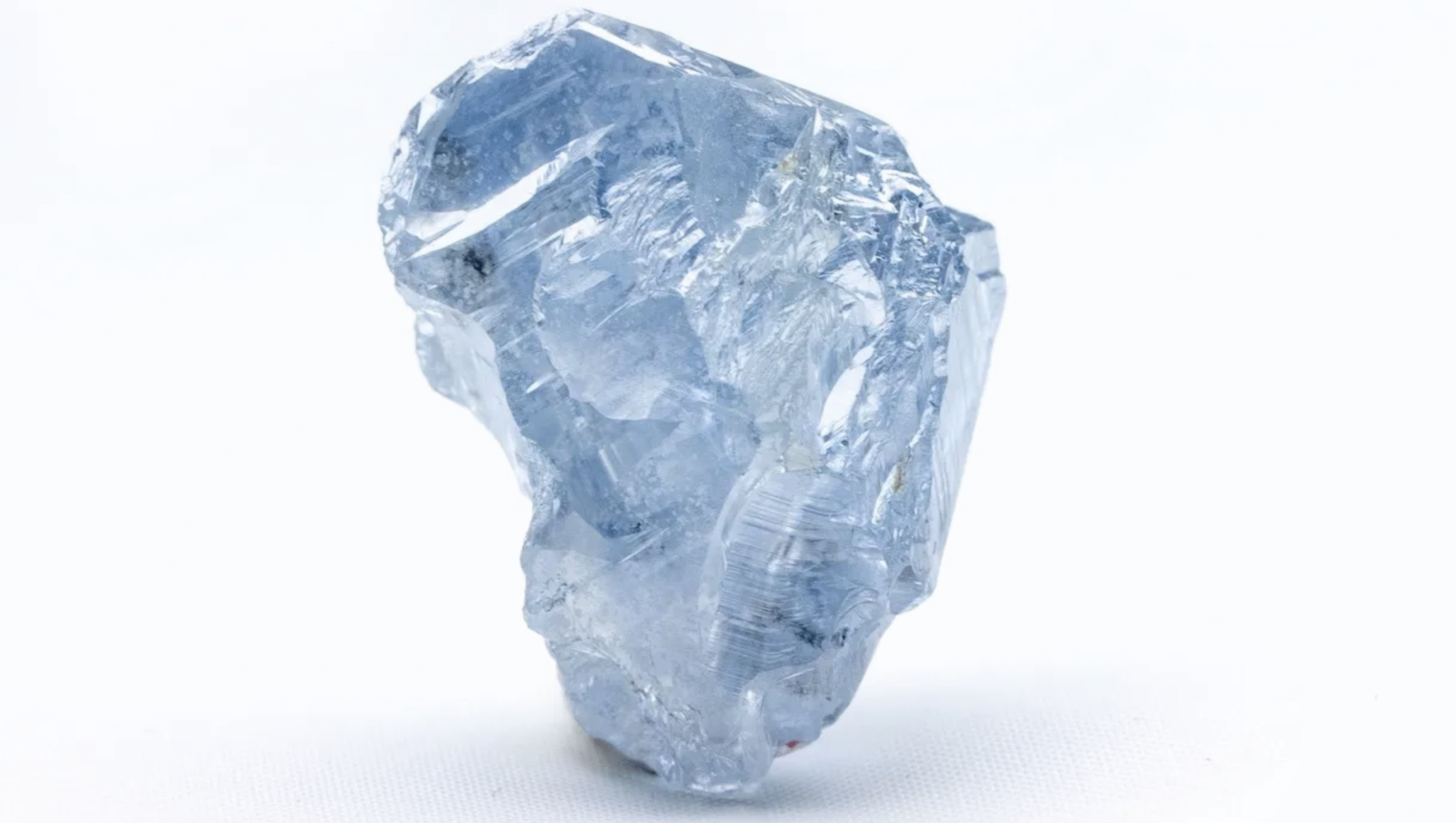
Petra Diamonds on 13 January 2026 announced the recovery of a huge 41.82-carat Type IIb blue diamond at its Cullinan Mine, in South Africa. The UK-based miner described the stone as being of “seemingly exceptional quality in terms of both its colour and clarity”. The iconic Cullinan mine is known for recovering high-value blue stones.
Last April it sold a 14.76ct blue stone, of “exceptional color and clarity,” for $8.2m. In July 2021 it sold a 39.34-carat blue diamond for $40.18m. The Letlapa Tala collection of five blue diamonds sold in November 2020 for $40.36m.
And a 29.60-carat rough that was cut into the Blue Moon sold for $25.6m in February 2014. It was subsequently auctioned in 2015 for $48.5m to Hong Kong billionaire Joseph Lau, who renamed it the Blue Moon of Josephine. Petra says it is in the process of analyzing the stone and deciding on a preferred method of the sale.
In October Petra Diamonds announced details of a $25m rights issue to keep the company afloat as it battles falling prices and production, together with rising debt and cash flow difficulties. Revenue for FY2025 was $206m, down 33 per cent year-on-year from $309m and net debt increased to $264m.
This natural diamond belongs to the ultra-rare classification of Type IIb blue diamonds, which means that it contains trace amounts of boron and little to no nitrogen. In a natural diamond, boron changes everything. Boron alters the way light moves through the diamond, absorbing red, orange, and yellow wavelengths and producing the blue and grayish-blue tones collectors prize.
Type IIb diamonds account for only about 0.1 percent of all natural diamonds. This makes them among the rarest materials found in nature. Most of the world’s most famous blue diamonds fall into this category, and their scarcity places them at the very top of the diamond market. Some Type IIb diamonds even conduct electricity, which is a scientific curiosity that makes them even more fascinating.
Cullinan Mine holds a singular position in diamond history. Discovered in 1902, the mine produced the 3,106-carat Cullinan Diamond, the largest gem-quality diamond ever found, later cut into nine principal stones that now reside in the British Crown Jewels. Beyond its colorless treasures, Cullinan has also earned recognition as the world’s most important source of natural blue diamonds.


2. The De Beers Cullinan Blue is a 15.10-carat Fancy Vivid Blue, Internally Flawless diamond. It sold in 2022 for $57.5 million, becoming the most valuable blue diamond ever sold at auction.
Sotheby’s auction house officially sold the incredible De Beers Blue Diamond, a fancy vivid blue diamond that is the largest of its kind to ever appear at auction, for a whopping $57 million, more than 20% more than its estimated value.
Weighing in at 15.10 carats, the De Beers Blue Diamond was estimated to sell at $48 million and was recently cut from an exceptional rough stone discovered in April 2021. Cut with step facets, it is the largest internally flawless step-cut vivid blue diamond that GIA has ever graded.
Both of these famous diamonds came from Cullinan, and both achieved their staggering prices only after meticulous cutting revealed their optimal color, size, and clarity. The newly recovered 41.82-carat blue diamond has the potential to surpass even these legendary stones, but no one will know until expert cutters finish their work.

For now, the 41.82-carat blue diamond discovery from Cullinan exists in a moment of anticipation. Its ultimate value, final size, and finished form remain unknown. Until then, the Cullinan Mine has once again proven why it remains one of the most legendary sources of natural diamonds in history.
 25
Feb
25
Feb
 19
Feb
19
Feb
 07
Feb
07
Feb
 07
Feb
07
Feb





Not a member yet? Register now
Are you a member? Login now