0
No products in the cart.
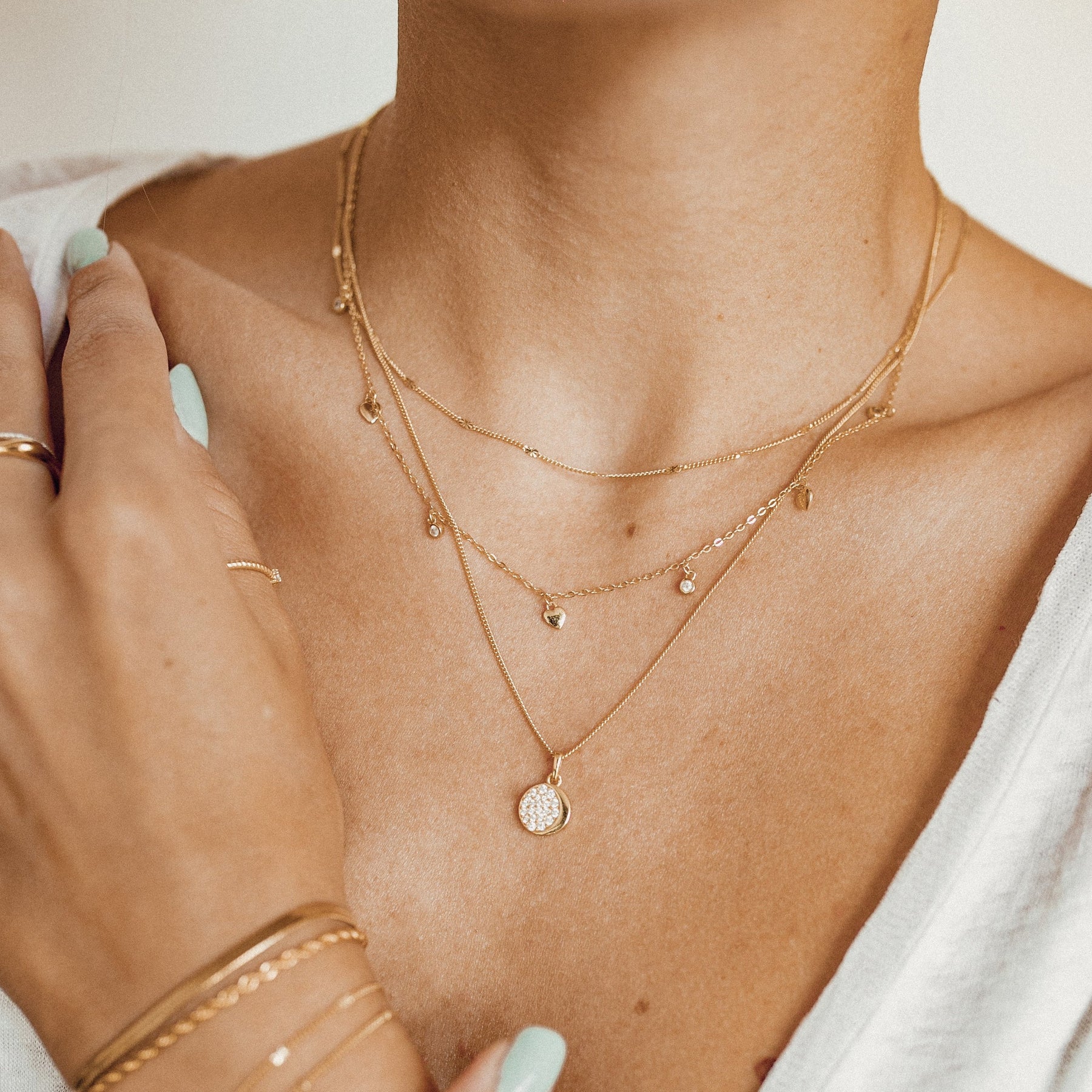
Delicate minimalist jewelry pieces with layered necklaces and rings for everyday wear

The Lightweight Revolution: Why Modern Consumers Are Choosing Minimalist Jewelry

The jewelry industry is undergoing a profound transformation—shifting away from heavy, expensive sets reserved for special occasions toward lightweight, versatile, and functional jewelry designed for everyday life.

For decades, jewelry was viewed as a “default term of treasure,” often locked away in banks. Today’s consumers—particularly Gen Z and Millennials—see jewelry differently: as a tool for daily self-expression, comfort, and personal identity. This shift represents a fundamental change in how consumers approach luxury.

The Shift Toward Lightweight Jewelry: Market Statistics

The move toward minimalist jewelry is driven by both economic pressures and changing lifestyle habits.

Layered thin gold necklaces styled together for minimalist look and versatility

Key Market Drivers

  • The “Golden Squeeze”:
    Gold prices surged by nearly 40% between 2024 and 2025, reaching approximately USD 4,000 per ounce, forcing both consumers and manufacturers to rethink traditional heavy designs.
  • Hollow and Delicate Forms:
    To maintain affordability without compromising aesthetics, artisans are increasingly adopting minimalist silhouettes, hollow constructions, and fine profiles that use less metal while retaining a luxurious appearance.
  • The Demi-Fine Jewelry Boom:
    The global demi-fine jewelry market—bridging fashion and fine jewelry—was valued at USD 2,351.3 million in 2024 and is projected to reach USD 8,084.2 million by 2035, growing at a CAGR of 11.88%.
  • Rise of Self-Purchasing:
    Approximately 76% of women now prefer to buy jewelry for themselves, rather than waiting for it as a gift. This has increased demand for pieces suitable for both professional and casual wear.
  • Price Sensitivity:
    More than 80% of online jewelry purchases are priced below ₹50,000 (approx. USD 600), naturally favoring lighter and more wearable designs.

Top Trends in Modern, Versatile Jewelry

The current jewelry landscape prioritizes high cost-per-wear value, flexibility, and adaptability.

1. 14-Carat Gold Innovation

With rising gold prices, many brands are shifting from 18-carat to 14-carat gold. It is not only more affordable but also more durable, making it better suited for daily wear. Understanding the psychology behind retail choices helps brands position these alternatives effectively.

2. Stacking and Layering

Popularized by brands such as Catbird, stacking and layering allow consumers to combine multiple delicate rings or necklaces for a personalized and evolving look. This aligns with personalized jewelry trends where consumers become co-creators of their style.

Close‑up of tiny gold dainty rings ideal for minimalist everyday jewelry styling

3. Modular Functionality

Consumers are increasingly drawn to modular jewelry—pieces composed of standardized elements that can be rearranged or combined to create multiple looks or serve different purposes.

4. Gold Vermeil

Gold vermeil—defined legally as a sterling silver base plated with at least 2.5 microns of gold—has emerged as a preferred option for those who want the appearance and feel of gold without the high cost of solid gold.

Case Study: “The Infinite Composition” Project

A recent design research initiative titled “The Infinite Composition” offers insight into the future of sustainable, modular jewelry for Generation Z.

Project Overview

  • Concept:
    A modular necklace system designed to position the wearer as a co-creator, rather than a passive consumer.
  • Design & Technology:
    The project used Multi Jet Fusion (MJF) 3D-printing technology and recyclable polypropylene, featuring interchangeable geometric modules—triangles, rhombuses, and pentagons—drawing inspiration from biomimicry, such as honeycombs and plant cell structures.
  • Results:
    In surveys conducted with Gen Z participants, 83% reported complete satisfaction with the modular concept, citing customization and adaptability for different occasions as the primary benefits.

Key Insights from the Case Study

  • User Engagement:
    Allowing consumers to actively assemble and modify their jewelry fosters deeper emotional connection and long-term attachment.
  • Longevity Through Adaptability:
    Modular designs evolve with changing tastes, reducing disposability and discouraging throwaway culture.
  • Technological Efficiency:
    3D printing enables on-demand manufacturing, significantly reducing material waste compared to traditional subtractive production methods.
  • Transparency Is Essential:
    Younger consumers expect brands to clearly communicate the journey of a product—from raw materials to final assembly—to build trust and credibility.

Frequently Asked Questions (FAQs)

Why are consumers shifting toward lightweight jewelry?

Rising gold prices, changing lifestyles, and the desire for everyday wearability have made lightweight jewelry more practical and accessible.

What is demi-fine jewelry?

Demi-fine jewelry sits between fashion and fine jewelry, offering higher-quality materials at more accessible price points.

Why is 14-carat gold becoming more popular?

14-carat gold is more affordable and durable than 18-carat gold, making it ideal for daily wear and minimalist designs.

What makes modular jewelry appealing to Gen Z?

Modular jewelry allows personalization, adaptability, and user involvement—qualities highly valued by Gen Z consumers.

Is gold vermeil considered real jewelry?

Yes. Gold vermeil uses a sterling silver base with a legally defined thickness of gold plating, offering durability and the look of solid gold at a lower cost.

Final Thoughts

The shift toward lightweight, minimalist jewelry reflects a broader cultural change—one that prioritizes function, versatility, sustainability, and personal expression over sheer material value.

As consumers redefine what jewelry means in their daily lives, the industry must adapt through thoughtful design, material innovation, and transparent practices. Understanding how to start a jewelry business in 2026 requires embracing these lightweight jewelry trends and meeting consumers where they are

At International Institute of Gemology (IIG), we view this lightweight revolution not as a compromise, but as an evolution—where modern design, technology, and consumer values converge to shape the future of jewelry.
    Share:

    Leave A Reply

    This site uses Akismet to reduce spam. Learn how your comment data is processed.

    You May Also Like

    India- EU FTA: A win for jewellery exports, but only if we evolve how we think about Europe

    The India-EU Free Trade Agreement (FTA) is being rightly celebrated as a landmark moment for our gems and jewellery industry. In simple terms, the EU...
    Read More »

    AI and its application in Gems & Jewellery industry

    The ever evolving Gem and Jewellery industry surprises us with rare gemstones speaking truths of about a million years, is now introducing another new chapter...
    Read More »
    Exclusive osmium jewellery piece by designer brand showcasing rare metal inlay

    Osmium at IIG Mumbai: The World’s Last Precious Metal — A New Frontier in Luxury and Innovation

    By: International Institute of Gemology (IIG) Introduction: Discovering the World’s Last Precious Metal What if there was a precious metal so rare, so distinct, that...
    Read More »
    Delicate minimalist jewelry pieces with layered necklaces and rings for everyday wear

    The Lightweight Revolution: Why Modern Consumers Are Choosing Minimalist Jewelry

    The jewelry industry is undergoing a profound transformation—shifting away from heavy, expensive sets reserved for special occasions toward lightweight, versatile, and functional jewelry designed for...
    Read More »

    Enquire Now

    Thank you for submitting the form.