

The process of gemstone identification stands as the fundamental skill that gemologists require for their work. The study of gem properties includes light transmission research which serves as a vital element for gemologists. Gemstone identification uses two primary optical classifications which include isotropic and anisotropic gemstones. The terms establish light propagation patterns which traverse through a gemstone’s crystalline arrangement.
Students who study gemology need to learn this distinction because it enables them to better identify gemstones and assess their light transmission characteristics. The guide presents these concepts through an easy-to-understand format which serves as a practical resource for entry-level learners and students.
Different materials cause light to exhibit various behavior patterns when it moves through them. The crystal structure inside gemstones determines how their light transmission properties will function. Some gemstones allow light to travel through them in the same way in all directions while others change the light path according to the specific direction of the light.
The two optical categories that separate gemstones into different groups require two distinct methods of identification.
The classification system serves as a critical aspect for gemstone identification while the testing process uses polariscope instruments as a standard method for evaluation.
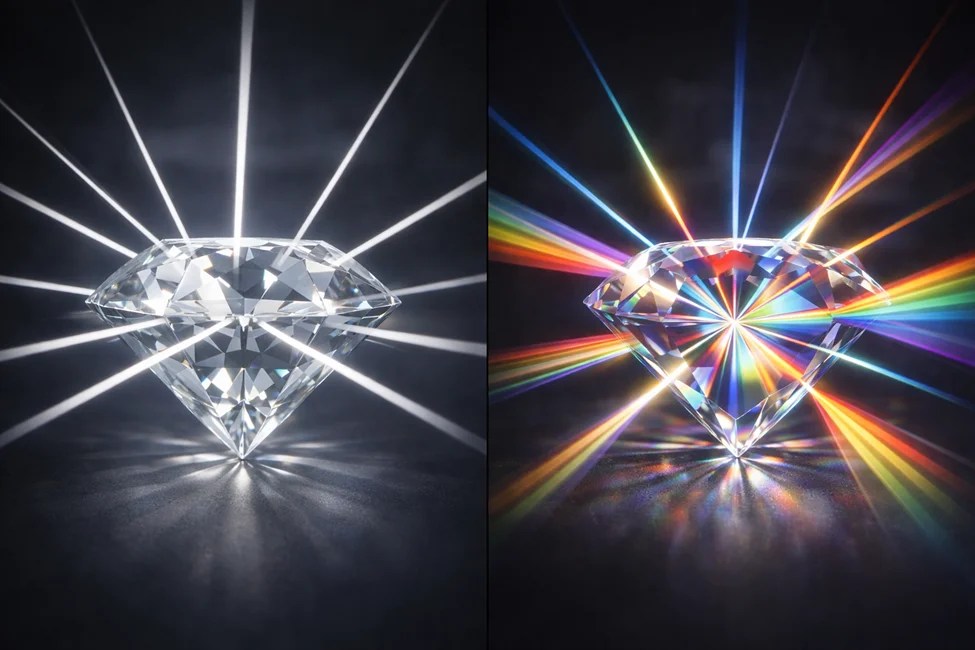
Isotropic gemstones are a type of mineral which allows light to pass through their crystals at an identical speed in all directions. The symmetrical crystal structure of these gemstones prevents them from producing dual refractive indexes which results in a single refractive index for the material.
The cubic crystal system serves as the base crystal structure for isotropic gems because it maintains symmetrical internal structure throughout its design. The list of common isotropic gemstones contains these three gemstones:
The gemstones show consistent optical properties which remain unchanged when light hits them from different angles.
Isotropic gemstones display a dark appearance which remains unchanged when they are spun under a polariscope. The light that passes through the material does not create two separate beams which results in this appearance.
The gemstone shows continuous darkness when exposed to polarized light which serves as the main proof that it possesses isotropic properties.
Isotropic behavior serves as an essential gemstone identification method for gemology students who need to recognize this behavior. The gemstone will most likely belong to the cubic crystal system if it maintains a dark appearance under the polariscope.
Diamonds and certain isotropic gemstones demonstrate this phenomenon because internal strain can lead to reduced light transmission in some cases.
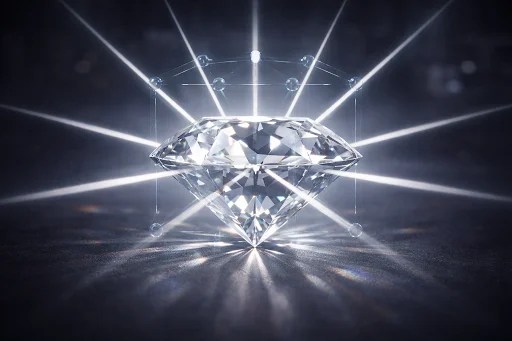
Anisotropic gemstones show different light passage through their crystals which results in different optical properties from isotropic gemstones.
The difference between the two light paths causes double refraction or birefringence which produces two separate light beams.
Anisotropic gemstones occur in crystal systems that have less symmetrical structures. These include:
Because of their structural complexity, light behaves differently as it travels through these crystals.

Many popular gemstones are anisotropic, including:
These gemstones often show optical effects related to birefringence.
Under a polariscope, anisotropic gemstones usually show light and dark patterns when rotated. This happens because the two rays of light interfere with each other as the gemstone moves under polarized light.
This blinking effect is known as anisotropic reaction and is a clear sign that the gemstone is not part of the cubic crystal system.
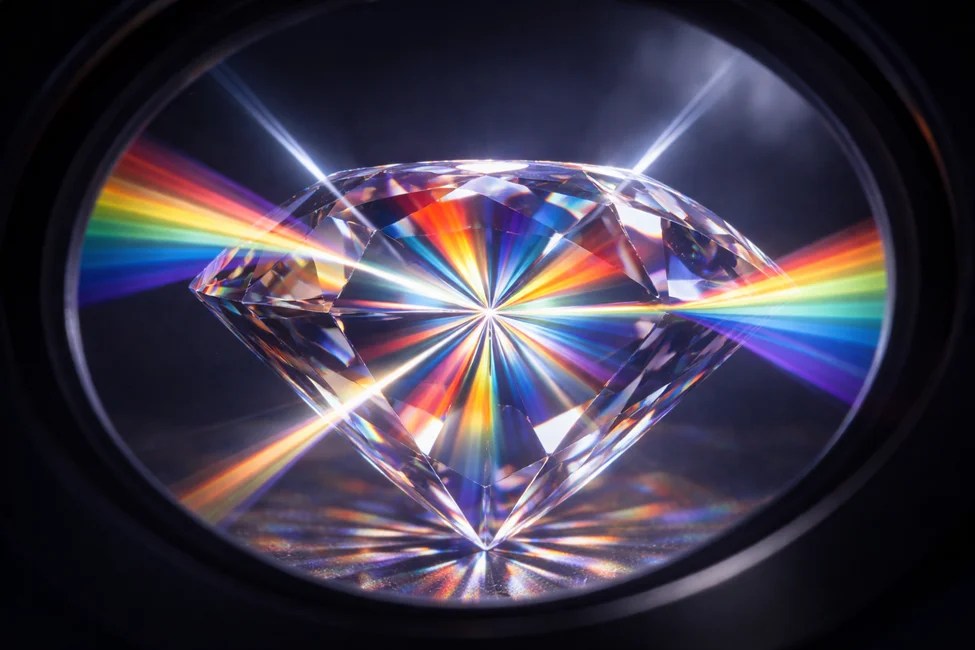
The key difference between isotropic and anisotropic gemstones lies in how they refract light.
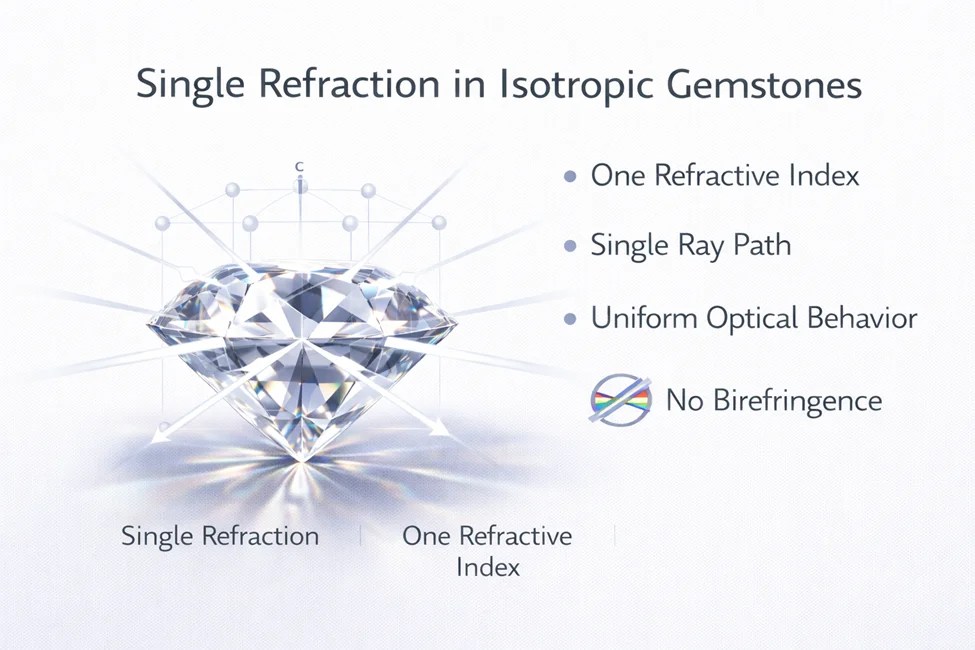
Isotropic gemstones exhibit single refraction, meaning light travels through the gemstone as a single ray.
This results in:
Anisotropic gemstones show double refraction, where light splits into two rays that travel at different speeds.
This produces:
This property is particularly visible in gemstones like calcite and zircon.

Gemology students use several instruments to study the optical properties of gemstones.
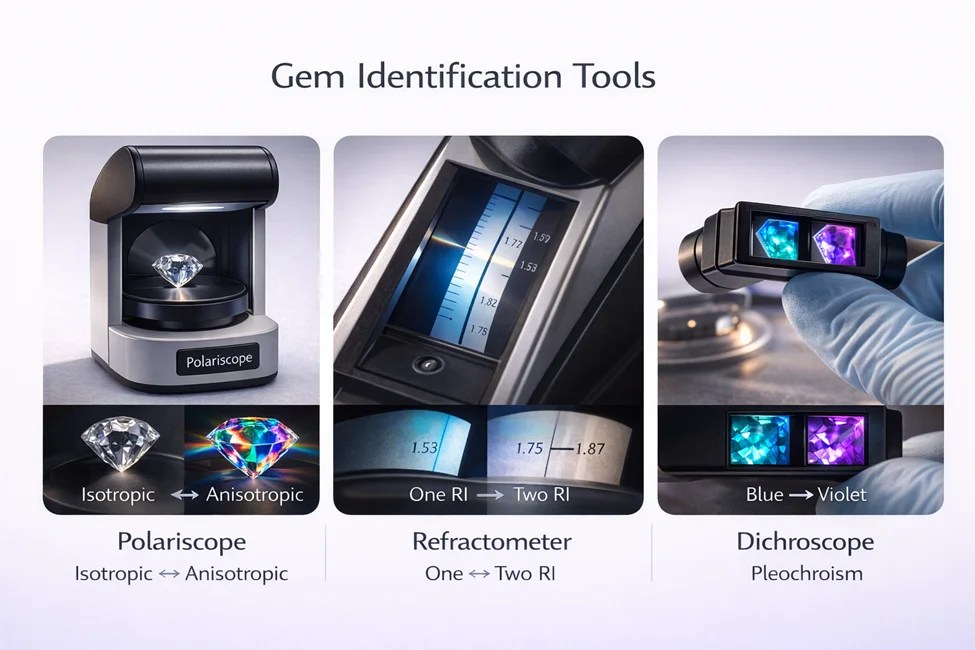
The polariscope is one of the most important tools used to determine whether a gemstone is isotropic or anisotropic.
Gemologists test how a stone reacts to polarized light by placing the gemstone between two polarized filters and rotating it.
A refractometer measures gemstone refractive index. The presence of two refractive indices indicates birefringence which proves that the material shows anisotropic properties.
Anisotropic gemstones exhibit pleochroism which causes them to show different colors when viewed from various angles. A dichroscope helps observe this property. Gemology students need this knowledge because they study gemstones in their profession.
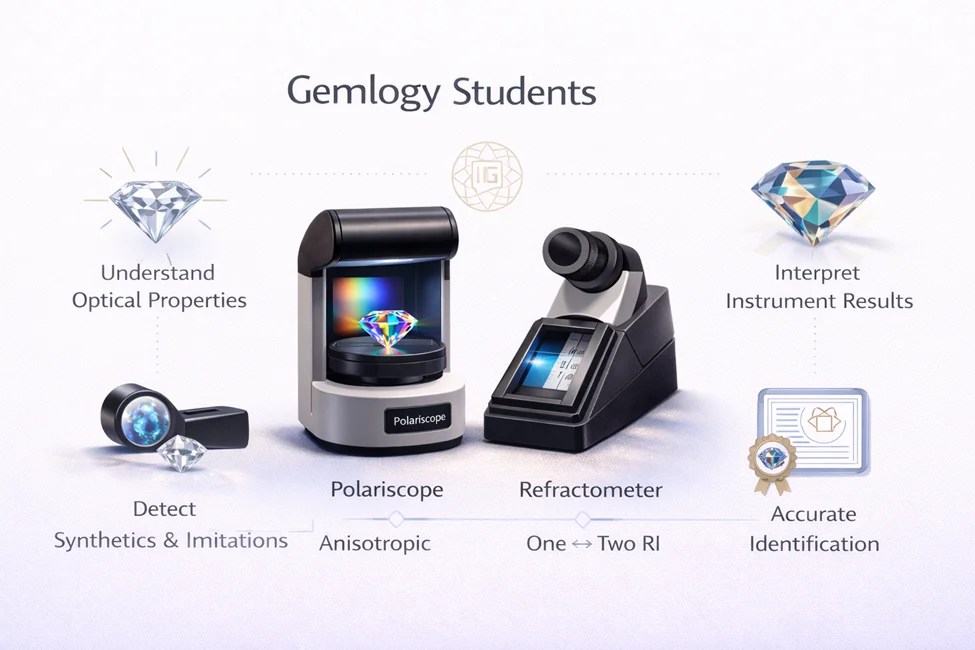
Students need to understand both isotropic and anisotropic gemstones because this knowledge forms the basis of gemology education. The program enables students to:
The concepts define gemstone analysis procedures which all gemology professionals and jewelry designers and gemstone traders need to understand.
Conclusion
In gemstone identification the main distinction between isotropic and anisotropic gemstones functions as a fundamental principle. Isotropic gems allow light to travel through them uniformly, while anisotropic gems split light into two rays due to their complex crystal structures. The gemology student shows precise gemstone identification through optical behavior studies which use polariscope and refractometer devices.
The IIG, International Institute of Gemology, India provides professional training for students who wish to learn scientific gemstone techniques through their core training program.
 13
Oct
 13
Oct
 02
Oct
 23
Sep





Not a member yet? Register now
Are you a member? Login now