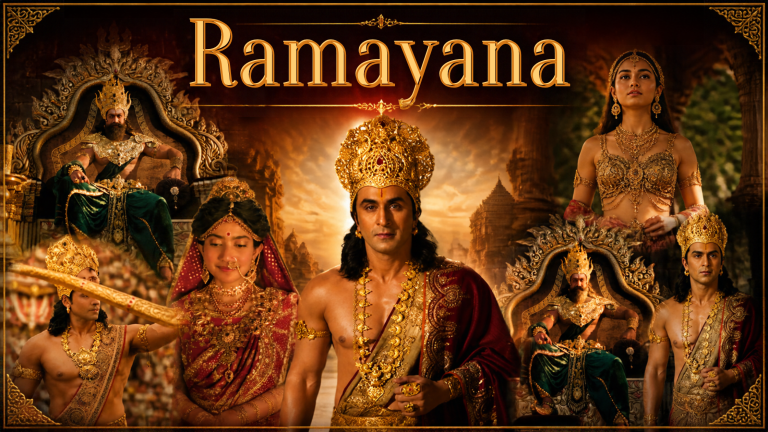
Beyond the Screenplay: How Amrapali’s 4,500-Piece Masterclass Elevated Ramayana: Rise of a Legend—And What It Teaches Us About Maryada and Craft
Working in Gems & Jewellery consulting, I tend to watch movies with two hats on. I look at the story unfolding on screen, and I look closely at the quiet, painstaking craft used to build that world.
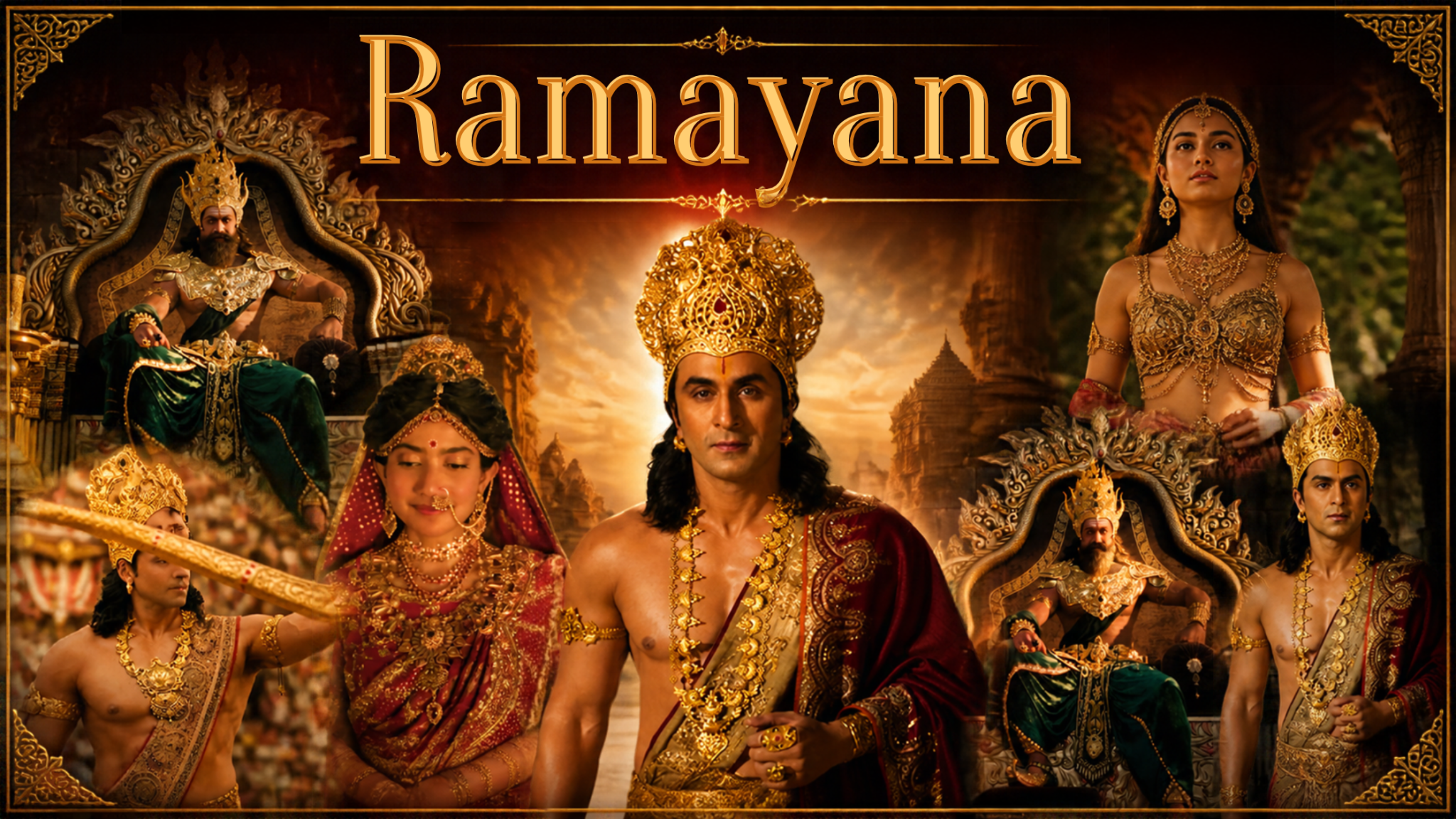
Watching Nitesh Tiwari’s Ramayana: Rise of a Legend—and comparing notes with critics like Sucharita Tyagi, Uday Bhatia, and Ishita Sengupta—one thing becomes obvious right away. As a piece of storytelling, the film plays it far too safe. Out of fear of controversy or another Adipurush-style backlash, it sticks to a literal, overly cautious pace. Ranbir Kapoor’s Ram feels so held back that it almost reads like a polite nod to Arun Govil, and odd choices like the clunky AI lip-sync dubbing for the English press screening only pull you out of the experience.
Where the script hesitates, though, the jewellery does the heavy lifting.
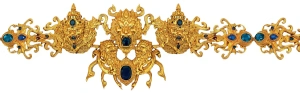
Led by Tarang Arora, Jaipur’s House of Amrapali (Tribe Amrapali) came on board as the official jewellery partner. Over roughly 18 to 24 months, their artisans made more than 4,500 custom pieces for the film. While the dialogue often shied away from taking risks, Amrapali’s archival research and metalwork gave the movie its real weight, grace, and visual soul.
Looking at how they pulled this off offers a few honest lessons for anyone building a brand in the Gems & Jewellery space—especially when you measure it against the timeless values of Maryada Purushottam Shree Ram.

1. Telling Character Stories Through Metal and Stone
Almost everyone agrees that Yash’s Ravana brings the sharpest energy to the screen, while Ram is played with quiet restraint. Long before anyone speaks a word, Amrapali’s designs set up that exact dynamic:
- Three Kingdoms, Three Design Languages: Instead of throwing generic “ancient” gold on everyone, Amrapali built separate visual worlds for Ayodhya, Mithila, and Lanka using traditional repoussé, jadau, and chitai work.
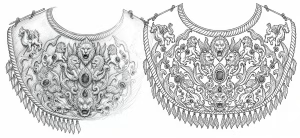
- Ayodhya & Lord Ram: Inspired by Raja Ravi Varma’s paintings and classic Navaratna traditions, Ram’s pieces rely on clean symmetry, sun motifs, and warm rubies to reflect the Surya lineage. His main necklace alone weighs 335 grams and subtly echoes the curve of his Kodanda bow.
- Mithila & Sita: Sita’s jewellery starts out soft, floral, and earthy. As the story moves into the 14-year vanvas, the gold gives way to simple rudraksha beads—and during her abduction, the ornaments she drops actually move the plot forward.
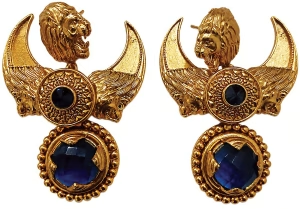
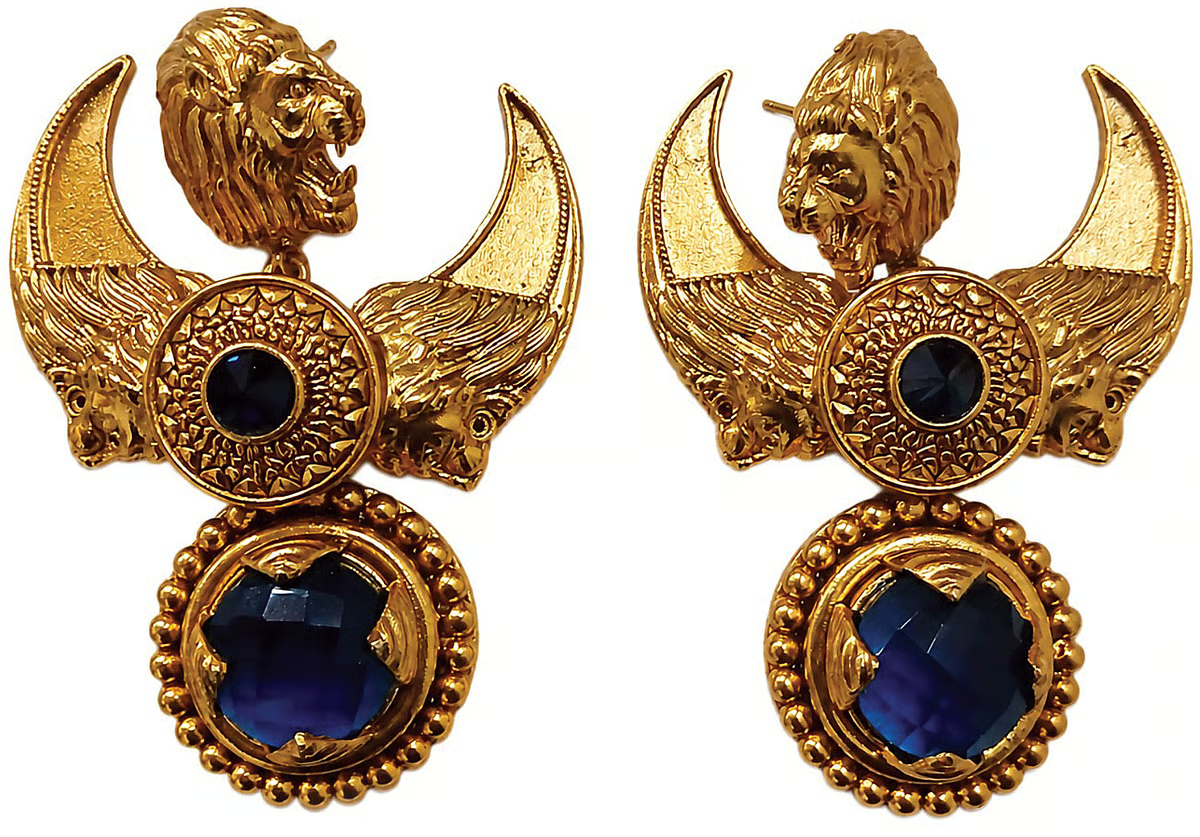
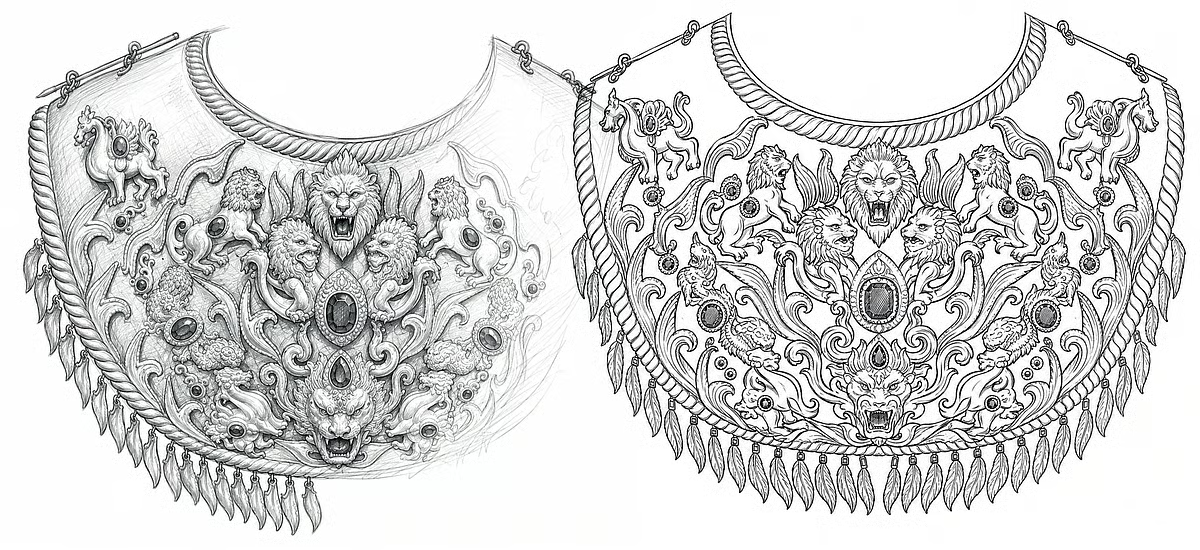
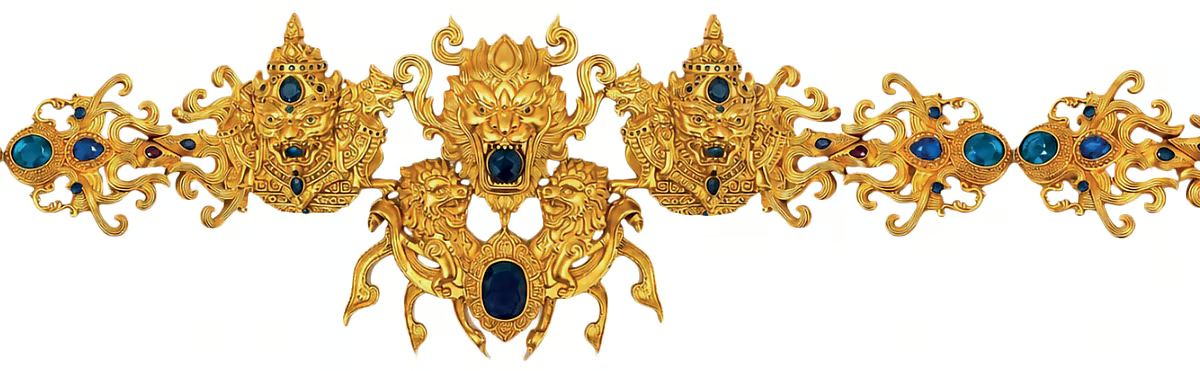
- Lanka & Ravana: To match Yash’s towering screen presence, Amrapali created around 104 to 130 brass and gold-plated pieces across 13 distinct looks, with single outfits carrying 6 to 7 kilos of metal. Covered in serpents, trishuls, demon motifs, and deep blue sapphires (a nod to Saturn, whom legend says Ravana kept under his footstool), the jewellery worked as both battle armour and a window into his mind.

2. Heavy Gold Can’t Fix a Weak Stone
In our critical breakdown of the film, we noted how Ramayana leans on big VFX and cosmic glows to make up for flat dramatic tension.
We see this exact mistake in jewellery showrooms every day. Heavy gold settings and bright showroom spotlights cannot save a poorly cut diamond. Amrapali dodged that trap by rooting their work in temple sculpture and the Amrapali Museum archives. Even when the movie’s script felt timid, the jewellery looked real and lived-in because the makers cared about honest design over empty flash.

3. Maryada Means No Shortcuts Behind the Scenes
One of the strangest calls the filmmakers made was using rough AI lip-syncing for the English press version—a shortcut that felt completely out of place on a project of this scale.
People often mistake Maryada for being passive or overly polite. In truth, Maryada is about unshakeable discipline, keeping your word, and respecting your craft even when nobody is watching. Compare that AI shortcut to how Amrapali’s karigars worked: before finalizing Ravana’s 7-kilo chest plates and arm guards, the artisans actually wore the heavy metal pieces themselves to make sure the actors could move and breathe through long shoot days. Whether you are grading a solitaire or finishing a bridal choker, Maryada means never cutting corners in the workshop.

4. Turning Big-Screen Heritage Into Everyday Retail
Amrapali also played the business side smartly. Instead of letting those 4,500 pieces sit in a vault after wrap, they translated the film’s aesthetic into a wearable retail line starting at ₹1,200 on Tribe Amrapali—turning big-screen prestige into real footfall and sales.
The Takeaway
Ramayana: Rise of a Legend is a study in contrasts. The script often stops short of greatness, yet the jewellery stands out as a genuine triumph of Indian craft. It is a good reminder for anyone running a jewellery business today: flashy spectacle wears off quickly, but deep research, honest discipline (Maryada), and thoughtful detail always last.
— Rahul Desai, Founder, RD Consultancy



 11
Nov
 13
Oct
 13
Oct