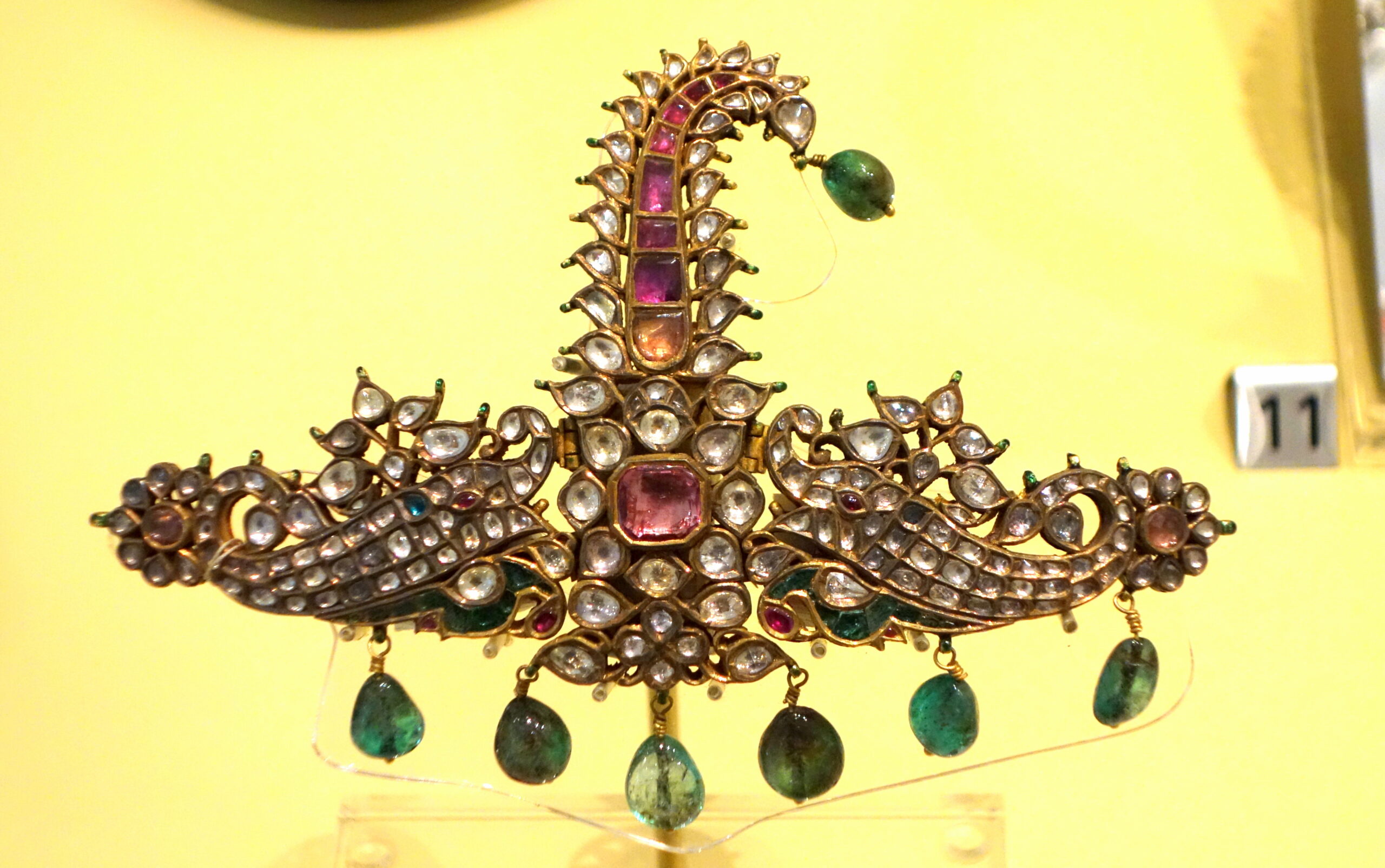
Indian Jewelry & Indian Women are linked to each other inherently since historical times. Since the olden times, Indians have managed to spectacularly enchant the world with their beautiful jewellery pieces. Indian jewellery inspires passion unlike any other object of desire. Every woman in India loves to wear at least a small piece of gold jewellery either in the form of glittering neckwear ornament, or dangling earrings or exquisitely crafted bangles. Even men wear simple gold ornaments like rings or bracelets and chains. Jewellery has become a part of Indian culture and tradition.

Indian Jewelry market has grown ever since now they have capabilities in making handmade as well machine-made in classic as well as neoteric designs. There are over 2.5 million jewellery shops in India and the most of them are family run. However, with the Indian consumers becoming more fashionable and quality conscious, retailing in the Indian jewellery sector. Exim Bank of India exemplifies India as one of the fastest growing jewellery markets in the world. The growth in this industry is likely driven by growth in jewellery exports to the major markets like U.S and Europe as well as the demand in the domestic market.
The history of Indian jewellery goes back over 5,000 years to the prehistoric past. Indian jewellery mocks chronology. Primitive men and women used flora and fauna around them, decorated themselves with seeds, flowers, feathers, and beads carved out of wood, stone and bone. Shells, berries, wings of butterflies and beetles were all used with great ingenuity. With the advance of civilization, the materials changed to copper, ivory, agate and semi-precious stones, and later to silver, gold and diamonds. The history of Indian jewellery will never stop to amaze us. We cannot accurately date back the Indian gemstones since styles and designs continued unchanged over the long period of time. Sculpted images of Gods, Kings, men and women which adorn the corridors of ancient temples provide a three-dimensional record of period-specific styles, design influences and crafting techniques of intricately carved jewels.

During the Indus valley civilization, various ornaments like rings, head ornaments, brooches and girdles were found, mostly they were melted or refined, moulded or chiselled, designed, cast. Greek and Hellenistic styles were found in Gandhara period, archaeologists have found massive earrings, torques and armlets incorporating bird or animal forms. Crest Jewel, crown, studs, hoops, jimmikis, chains, chokers, ropes of pearls and beads, armlets, bangles, bracelets, nose rings, rings on fingers and toes, girdles and anklets were found during the golden age of India that is during the Gupta Empire. By the time, when the Britishers ruled we could print all kinds of jewellery designs in a catalogue.

The contemporary Jewelry today is rapidly changing according to the demands of the consumers. Old Jewelry pieces have always been and will remain golden pieces of art, but they were also heavily embodied with gems and pure diamonds making it heavy weighted obviously these were the kind of jewellery made for the kings, queens, court men.Now a day’s lifestyles are becoming more lavish and comfortable style, people, women prefer lighter ornaments that can be worn in their daily life, be it work or a gala event. Golden gemstones of pre-historic gemstones are being remoulded in contemporary style jewellery.
Gold is a rare metal. Gold is produced from mines on every continent except Antarctica. There are several hundred gold mines operating worldwide ranging in scale from minor to enormous. At present, there are more than 400 mines in the world. India ranked 6th among the gold-producing countries of the world, with a production of 19.5 tonnes in 1905. Today it produces only around 4 tones which is a mere 0.4 per cent of its gold consumption. In 2016 imports decreased to 510 tonnes from 922.46 tonnes in 2015 due to demonetization policy of the government.

In the early 90’s, the government reforms in the policies resulted in an initiative towards globalization. The retail jewellery segment in India currently accounts for 7-10 % of the total retail market. The industry is being dominated by family jewellers, who constitute nearly 96 % of the market. Organized players such as Tata with its Tanishq and Gitanjali have entered the market with branded jewellery which constitutes the remaining 4 %. The top two organized jewellers are Malabar Gold and Diamonds and Kalyan Jewellers. The two major national players Titan-Tanishq, including Gold Plus and Geetanjali group occupy third and fourth place respectively. The jewellery retail future in India is bright. There is around Rs. 80,000 crore domestic jewellery markets in India. Jewellery retailing in India is undergoing a slow transformation from a largely unorganized sector into a more organized one. The Indian jewellery retail segment is going global. Since Indian consumers are becoming more aware and quality conscious, branded jewellery is becoming very popular.
The risk factor of being in the jewellery sector business is circumscribed by standardization as the Indian market primarily consumes gold. Gold jewellery is also bought as an investment. In the present system of gold jewellery, the purity may or may not be standard and since hallmarking is not compulsory, cheating on karate is widespread.
The jewellery sector is fast growing in our country, occupying an important position in the Indian economy & is a leading foreign exchange earner.
 13
Oct
 13
Oct
 02
Oct
 23
Sep




Not a member yet? Register now
Are you a member? Login now